HAPPY LIFE
WHAT NEWS?
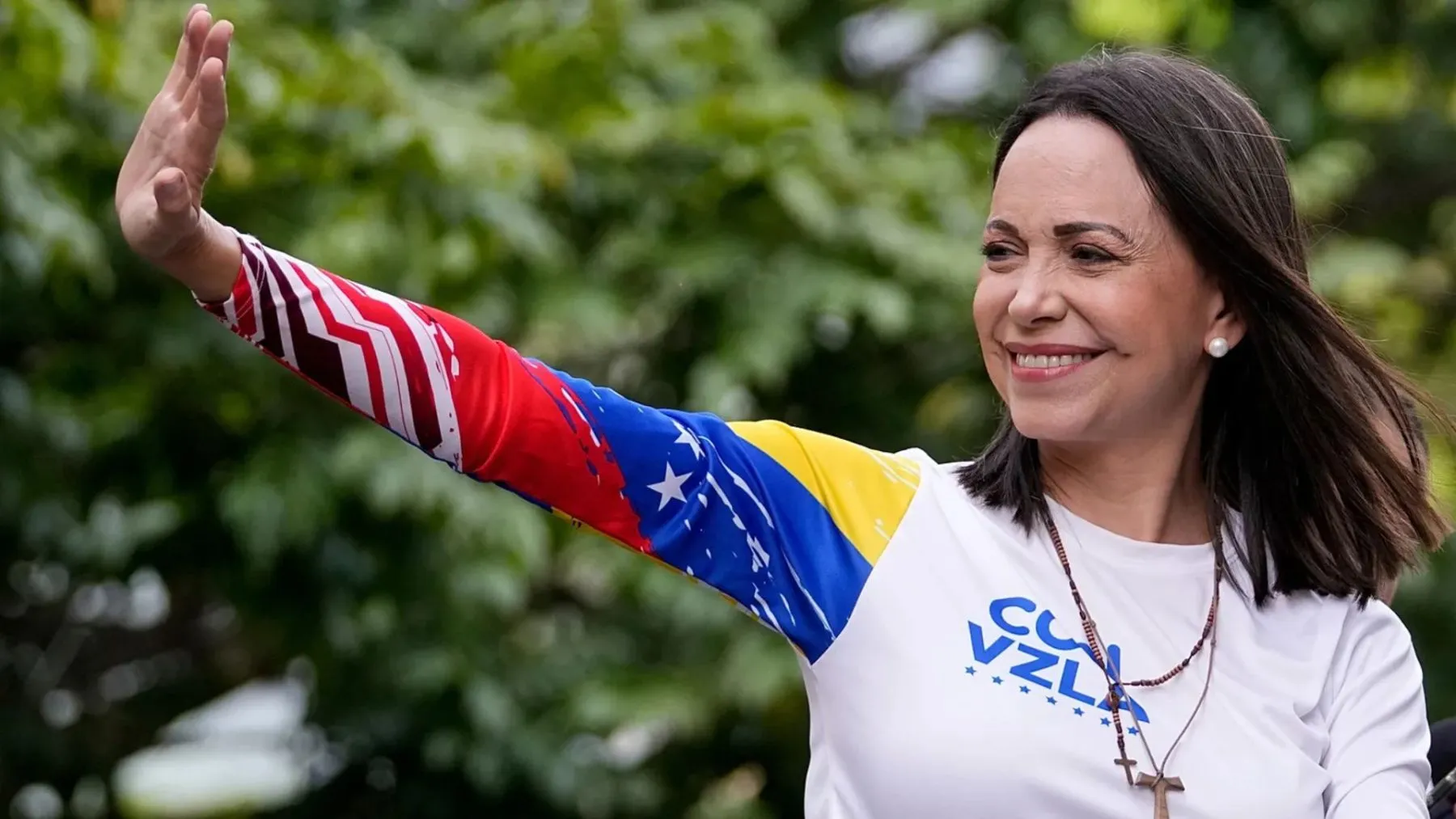
Venezuelan Nobel Peace Laureate María Corina Machado's Oslo Appearance Canceled
Venezuelan Nobel Peace Laureate María Corina Machado's Oslo Appearance Canceled


Trusted News - Expert Analysis - Global Coverage
Venezuelan opposition leader María Corina Machado's Nobel Peace Prize news conference was canceled in Oslo, casting uncertainty over her attendance at Wednesday's prestigious award ceremony.
achado, who has not appeared publicly for nearly 11 months, was expected to hold the traditional pre-ceremony briefing. However, the event was delayed for several hours without explanation before the Norwegian Nobel Institute confirmed that the conference "will not take place today."
In a statement, the institute noted the difficulty surrounding Machado's travel and current circumstances, saying: "María Corina Machado has herself stated in interviews how challenging the journey to Oslo, Norway, will be. We therefore cannot at this point provide any further information about when and how she will arrive for the Nobel Peace Prize ceremony."
Machado, 58, received global recognition on October 10 for her unwavering fight to restore democracy in Venezuela. The Nobel Committee praised her as a woman "who keeps the flame of democracy burning amid a growing darkness."
Her win comes amid one of Venezuela's most fraught political periods. Machado overwhelmingly won the opposition primary and intended to challenge President Nicolás Maduro in the 2024 election. However, Maduro's government barred her from running, forcing retired diplomat Edmundo González to step in as the opposition's candidate.

The run-up to the July 28 election was marred by widespread repression, arbitrary arrests, candidate disqualifications, and reports of human rights violations. After the government-controlled National Electoral Council declared Maduro the winner—despite credible evidence of irregularities—González fled to Spain following the issuance of a warrant for his arrest.
Machado went into hiding earlier this year. Her last public appearance was on January 9, when she was briefly detained after joining supporters during a protest in Caracas. She vanished from public view the following day as Maduro was sworn in for a third six-year term.
Her prolonged absence and the secrecy surrounding her movements have fueled speculation about her safety and ability to travel internationally. Venezuelan authorities have issued multiple arrest warrants against opposition figures, and human rights organizations have documented systematic persecution of government critics.
With the Nobel Peace Prize ceremony set for Wednesday, it remains unclear whether Machado will be able to attend in person—a highly symbolic moment for Venezuelans hoping for democratic change. The Norwegian Nobel Institute did not confirm whether the news conference could be rescheduled, leaving her attendance at Wednesday's ceremony uncertain.
Machado's spokesperson did not immediately respond to inquiries about her location or travel plans. The international community is watching closely, as her absence could underscore the risks faced by opposition figures in Venezuela and highlight the ongoing repression under Maduro's government.
The Nobel Peace Prize ceremony traditionally includes the laureate's lecture, a key moment where recipients outline their vision for peace. If Machado cannot attend, it would mark one of the rare instances where a living laureate is absent from their own award ceremony due to security concerns.

Previous Nobel laureates from conflict zones have faced similar challenges. In 2010, Chinese dissident Liu Xiaobo was unable to attend his ceremony due to imprisonment. In 1991, Burmese opposition leader Aung San Suu Kyi was under house arrest when she won, and her son accepted the award on her behalf.
The United States, European Union, and several Latin American governments have called for Machado's safe passage to Oslo. U.S. Secretary of State stated: "The world is watching. Venezuela must allow María Corina Machado to travel freely to accept this prestigious award that recognizes her courageous struggle for democracy."
Meanwhile, the Maduro government has remained silent on the matter. Venezuelan state media has largely ignored Machado's Nobel Prize, focusing instead on government achievements and criticizing what it calls "foreign intervention" in Venezuela's internal affairs.
Human rights organizations have documented increasing repression in Venezuela over the past year. According to the UN Human Rights Council, there have been over 300 political prisoners in Venezuela, with opposition activists facing surveillance, harassment, and arbitrary detention.
While rare, there are precedents for Nobel Peace Prize laureates being unable to attend their award ceremonies due to political circumstances. The most notable cases involve laureates from authoritarian regimes or conflict zones where their freedom of movement is restricted.
In 2010, Chinese activist Liu Xiaobo was serving an 11-year prison sentence when awarded the Nobel Peace Prize. His chair remained empty at the ceremony. In 1991, Aung San Suu Kyi was under house arrest in Myanmar when she won; her British husband accepted the award on her behalf.
The Norwegian Nobel Committee has historically stood firm in awarding prizes to dissidents and activists facing repression. Committee chair Berit Reiss-Andersen stated after Machado's award: "This prize is a recognition not only of María Corina Machado's courage but of all Venezuelans who continue to fight for democracy against great odds."
Looking ahead, diplomatic efforts continue behind the scenes to secure Machado's safe travel. Norwegian authorities, known for their discreet diplomacy, are reportedly in contact with various parties to facilitate her journey. However, with less than 24 hours until the ceremony, the situation remains fluid and uncertain.
As the world awaits news from Oslo, Venezuelans both inside and outside the country view Machado's potential appearance as more than just a ceremony—it would be a powerful symbol of resistance and hope. Her ability to speak freely at the Nobel podium would represent a rare victory for Venezuela's oppressed opposition movement.