
HAPPY LIFE

WHAT NEWS?
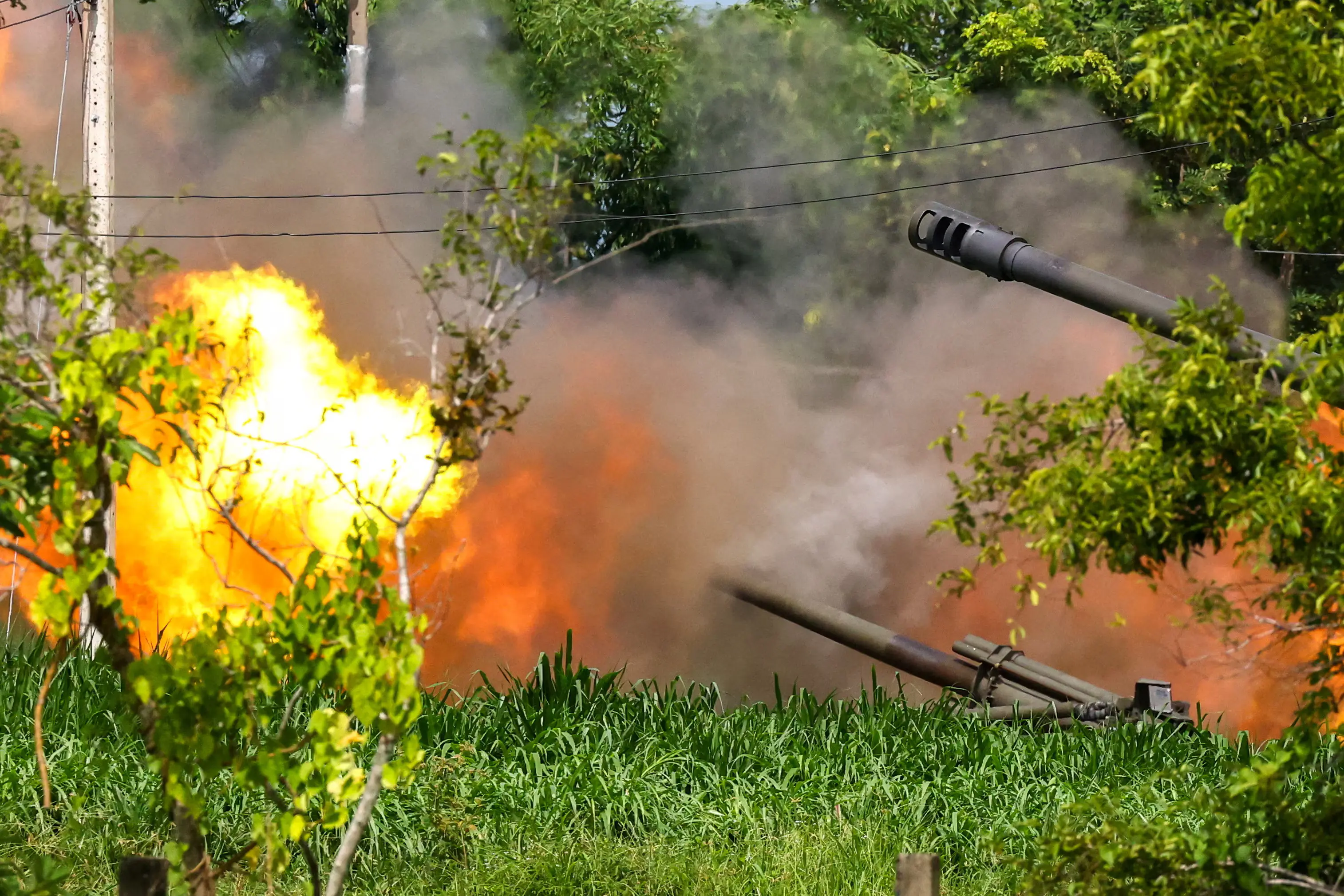
Fresh Clashes Erupt on Thailand–Cambodia Border: How Their Militaries Compare
Fresh Clashes Erupt on Thailand–Cambodia Border: How Their Militaries Compare


Trusted News - Expert Analysis - Global Coverage
Fresh clashes erupt on Thailand–Cambodia border after ceasefire violations. Detailed comparison of military strength, budgets, and capabilities by Austin Chen.
angkok/Phnom Penh — New fighting erupted along the contentious Thailand–Cambodia border as both nations accused each other of violating a recently negotiated ceasefire, according to a Reuters report. Thailand confirmed it launched air strikes near the disputed frontier after weeks of rising tensions.
The latest flare-up comes after Thailand halted de-escalation measures last month. Bangkok says a Thai soldier was severely injured by a landmine allegedly newly planted by Cambodia—an accusation Phnom Penh strongly rejects.
Cambodia allocated $1.3 billion to defence spending in 2024 and maintains an estimated 124,300 active military personnel. Its modern armed forces were formed in 1993 following the merger of the country's former communist military with two resistance groups.
The Cambodian Army, its largest branch, fields around 75,000 troops, supported by more than 200 battle tanks and roughly 480 artillery systems.
Thailand, designated by the United States as a major non-NATO ally, has a significantly larger and better-funded military. Its 2024 defence budget stood at $5.73 billion, with more than 360,000 active personnel across its services.
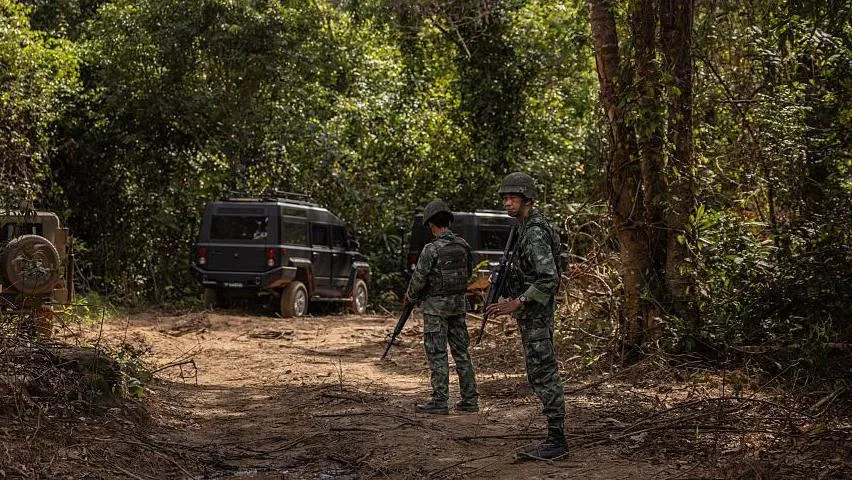
The Royal Thai Army consists of about 245,000 troops, including an estimated 115,000 conscripts. It operates around 400 battle tanks, over 1,200 armoured personnel carriers, and approximately 2,600 artillery weapons. The army also maintains its own aviation fleet, including transport aircraft, UAVs, and multiple U.S.-made Black Hawk helicopters.
Cambodia's air force is comparatively small, with around 1,500 personnel and a modest mix of aircraft — including 10 transport planes and 10 transport helicopters. Cambodia does not operate any fighter jets, but it fields 16 multi-role helicopters, among them six Soviet-era Mi-17s and ten Chinese Z-9 models.
Thailand, by contrast, operates one of Southeast Asia's most capable air forces. With around 46,000 personnel and 112 combat-ready aircraft, the Royal Thai Air Force includes:
The Cambodian Navy has approximately 2,800 personnel, including 1,500 naval infantry, and operates 13 patrol and coastal vessels along with a single amphibious landing craft.
Thailand's navy is far larger and more diverse, with nearly 70,000 personnel, including its marine corps, naval aviation wing, coastal defence, and conscripted sailors.
Its fleet includes:
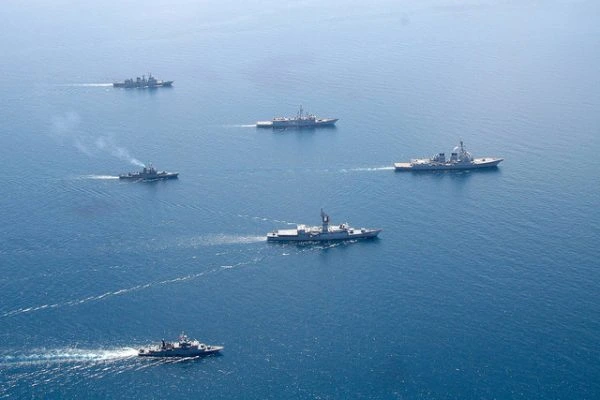
The Royal Thai Marine Corps, consisting of 23,000 troops, is supported by dozens of armoured vehicles and a range of aviation assets. Thailand's naval capabilities dwarf those of Cambodia, reflecting its strategic position along key sea lanes and longer coastline.
The renewed border violence underscores longstanding friction between the neighbouring nations, whose territorial disagreements have sparked multiple clashes over the years. Both sides are urging international partners to help reinforce calm, though neither government has indicated when negotiations for a lasting solution might resume.
Analysts note that while Thailand enjoys overwhelming conventional military advantages, Cambodia has historically relied on asymmetrical tactics and positional defences along the contested border areas. The current clashes highlight how historical grievances and unresolved border demarcation continue to fuel regional instability.
International observers are monitoring the situation closely, concerned that further escalation could draw in regional partners and complicate ASEAN's efforts to maintain stability in Southeast Asia. The United States, which maintains close military ties with Thailand, has called for restraint and a return to dialogue.