
HAPPY LIFE

WHAT NEWS?
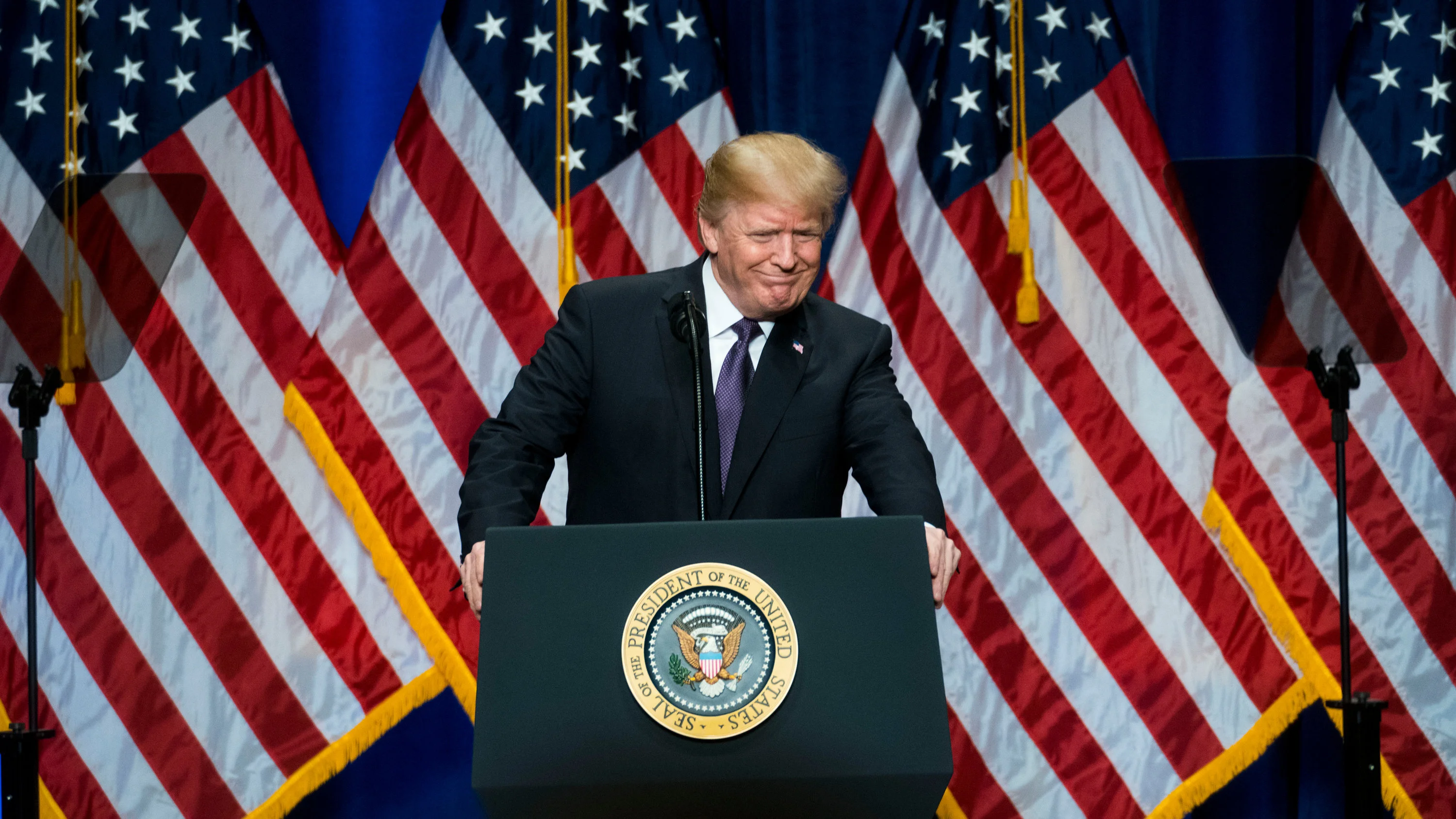
US National Security Strategy Shift: Culture War Over Global Strategy
US National Security Strategy Shift: Culture War Over Global Strategy


Trusted News - Expert Analysis - Global Coverage
The Trump administration's newly released U.S. National Security Strategy (NSS) has triggered intense debate among analysts, diplomats, and foreign-policy experts. Although the document claims to present a realistic blueprint for defending American interests, critics argue that it functions less as a strategic roadmap and more as an ideological manifesto—one that emphasizes culture war politics over a coherent geopolitical vision.
espite beginning with a lecture on what "strategy" supposedly means, the NSS fails to meet its own definition. The text reads more like a statement of grievances and values than a structured plan linking national objectives to resources, alliances, and capabilities. Rather than clarifying America's posture in an increasingly multipolar world, it undermines the very foundations that historically made the United States influential, prosperous, and secure.
The first "vital interest" listed in the document is to maintain stability in the Western Hemisphere to prevent "mass migration" to the United States—framed as a modern reinterpretation of the "Trump Corollary" to the Monroe Doctrine, a concept left undefined.
Other goals include:
Yet the NSS offers no explanation of how domestic policies—such as restrictions on universities, immigration crackdowns, and isolationist rhetoric—will impact America's ability to compete globally. It lists national assets, but never organizes them into actionable plans, budgets, alliances, or diplomatic initiatives.
The result is a document filled with lofty language but empty space where strategy should be. As one former national security advisor noted, "A true strategy requires trade-offs, priorities, and a clear theory of victory. This document provides none of those elements, instead offering a laundry list of complaints and aspirations without a coherent plan to achieve them."
The strategy presents a long list of contradictions:
The NSS also repeats the Biden-era notion of crafting "foreign policy for the middle class," arguing that prior strategies failed ordinary Americans. Yet it provides no explanation of how disengagement from global leadership would improve living standards in the United States.
Most troubling, analysts say, is the document's assertion that the United States should concern itself only with foreign actions that "directly threaten U.S. interests." This narrow framing contradicts decades of bipartisan foreign policy based on cooperation, alliance networks, and shared institutions.
If Washington refuses to support or protect partners, why should those partners support American interests in return—whether through military cooperation, economic integration, or diplomatic alignment?
The NSS assumes that other countries will continue to:
...even while the U.S. withdraws from its own responsibilities. This is a dangerous miscalculation.
"Alliances aren't charity—they're reciprocal relationships," explained a former State Department official. "When the U.S. signals that it will only act when its immediate interests are threatened, it tells allies they should pursue their own security arrangements without American support. This accelerates the fragmentation of the very international order that has benefited the United States for decades."
Strategic failures typically stem from a failure of imagination. The new NSS appears unable—or unwilling—to imagine a world where:
Globalization is advancing with or without Washington. This strategy ensures it will advance without the United States. Instead of shaping the international order, the United States risks becoming a spectator to it.
Perhaps the most revealing aspect of the document is what it downplays—or ignores entirely. The NSS barely mentions Russia's war in Ukraine, brushes aside the dangers of rising authoritarianism, and offers little engagement with the ideological challenge posed by China or Russia.
Instead, it harshly criticizes America's democratic allies, while expressing little concern about states actively undermining the U.S.-led order.
The new National Security Strategy does not articulate a path forward for U.S. global leadership. Instead, it signals a retreat into cultural and political battles that have little to do with the complex geopolitical realities of today's world.
By rejecting the values and cooperative frameworks that underpinned the post-1945 international order, the strategy risks accelerating the decline of U.S. influence. Without a coherent plan to rally allies or inspire international confidence, the United States may find its global position increasingly fragile—and its adversaries increasingly emboldened.
As one veteran diplomat summarized: "This isn't a strategy for navigating a dangerous world—it's a manifesto for American withdrawal. And in a world where power abhors a vacuum, that withdrawal will be filled by others who do not share American values or interests."
The shift toward culture-war politics in national security planning has several concerning implications:
The fundamental challenge for U.S. national security in the 21st century is not whether to engage with the world, but how to do so effectively in an era of great-power competition, technological disruption, and complex transnational threats. A strategy focused primarily on domestic culture wars fails to address these realities.